
A FOOTHILLS HOME GUIDE RESOURCE
An overflow is a symptom. Record its location.
Water over the edge does not identify a single cause. Describe the pattern without climbing, dismantling parts or trying to reproduce it.
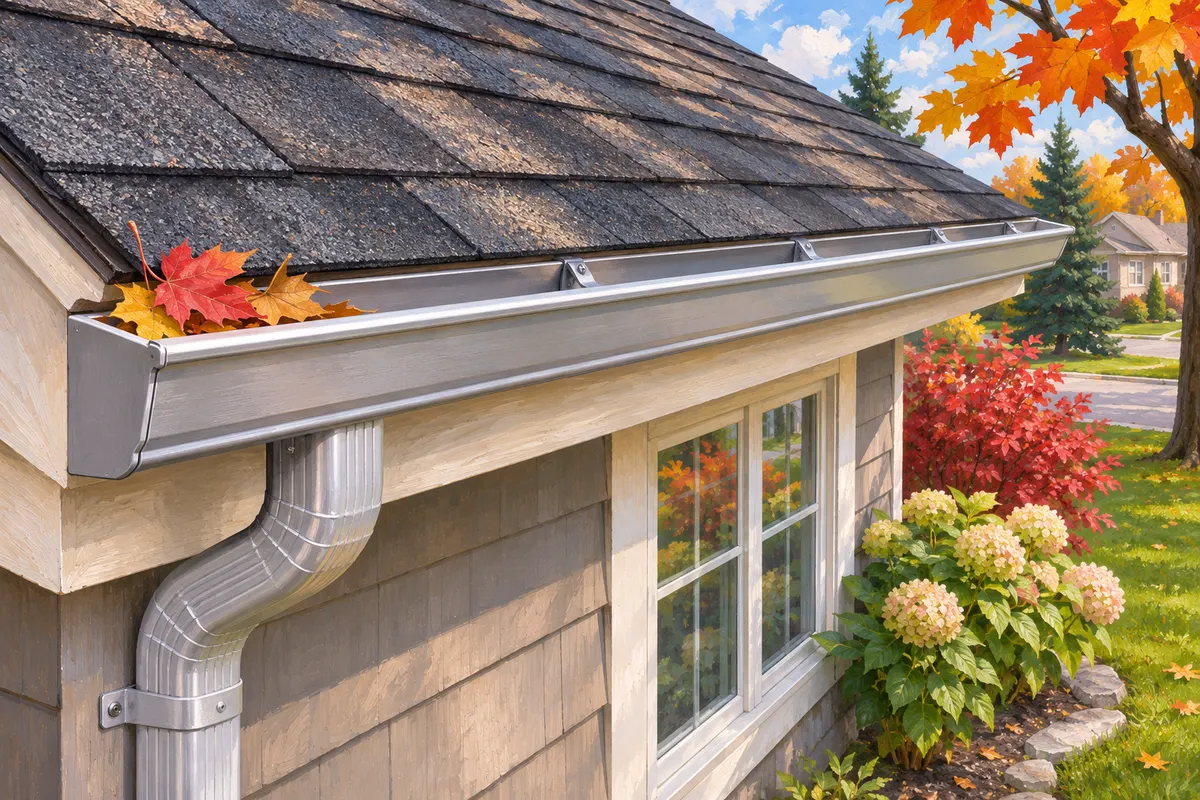
Note the pattern safely
Record whether water spills at one corner, along a section, near a joint or beside a downspout. Mention whether it happens during ordinary rain, heavier rainfall or melting conditions. If safely available, include an overall ground-level photo and identify the location.
Describe visible debris, a disconnected outlet or a section that appears out of alignment. These are observations for assessment, not a remote diagnosis. Do not approach falling material or electrical hazards to collect details.
When clearing is not the whole answer
If overflow continues after a service, ask which parts were cleared and checked. The next assessment may concern condition, alignment, capacity or the drainage route beyond the downspout. A qualified professional should determine which issue applies.
Do not redirect water towards neighbouring property or alter a connected drainage system without checking the applicable requirements and obtaining suitable advice.
Respond directly to active hazards
For water entering the building, loose overhead components or another immediate hazard, keep clear and contact an appropriate qualified service directly. Use emergency services for immediate danger. Our enquiry form does not provide urgent dispatch or establish that the property is safe.
For routine concerns, use the observation planner.